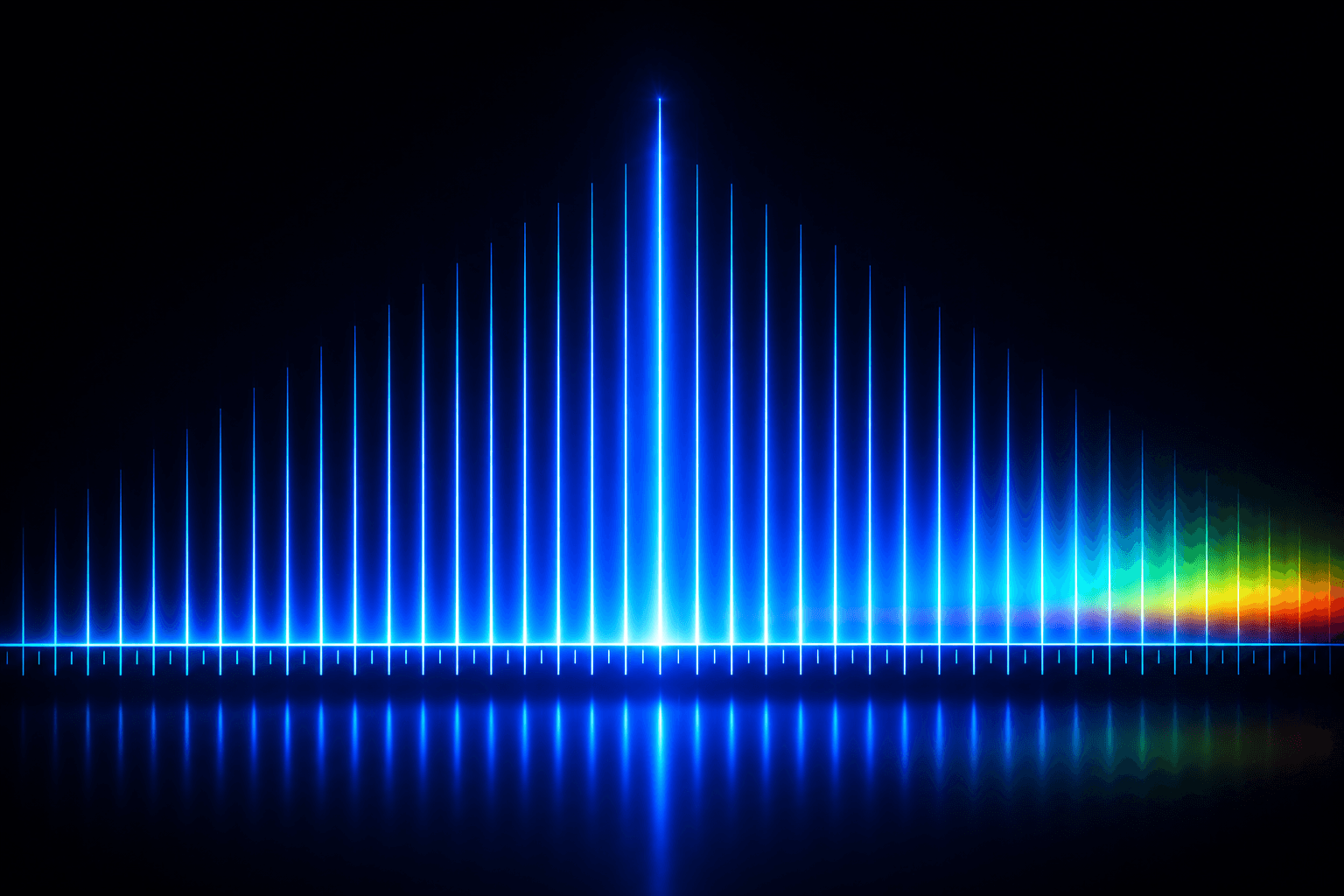
Frequency Comb
Dr. Jay Mangaonkar
Optical frequency combs have quietly transformed how modern science measures time, frequency, and light. What once required multiple bulky instruments can now be achieved with a single, phase-coherent laser system capable of producing thousands of equally spaced frequency lines—like the teeth of a comb.
At their core, frequency combs bridge the gap between optical and microwave domains. This capability enables direct measurement of optical frequencies with unprecedented precision. The impact is far-reaching: from redefining the second in atomic clocks to enabling high-resolution spectroscopy for chemical sensing.
In metrology labs, frequency combs serve as rulers for light. They allow researchers to measure absolute frequencies with accuracies down to parts in 10¹⁸. This level of precision is critical for next-generation atomic clocks, which are now being explored for applications in navigation systems, space missions, and secure communications.
Beyond timekeeping, frequency combs are finding increasing relevance in telecommunications. With the rise of coherent optical communication, combs enable dense wavelength division multiplexing (DWDM) with exceptional stability. This allows multiple data channels to be transmitted simultaneously over a single optical fiber, significantly increasing bandwidth.
In industrial and medical applications, comb-based spectroscopy is enabling real-time, high-sensitivity detection of gases and biomolecules. Unlike conventional spectrometers, comb systems can simultaneously capture a wide spectral range without compromising resolution.
Despite their capabilities, adoption has historically been limited by cost, complexity, and reliance on imported systems. This is where indigenous development becomes crucial. Building robust, configurable, and reliable comb systems locally not only reduces costs but also accelerates innovation cycles within research and industry.
As precision requirements continue to tighten across domains, optical frequency combs are no longer niche instruments—they are foundational tools. The next phase of growth will depend on making these systems more accessible, modular, and scalable for a wider range of applications.